




Have an urgent care enquiry? We're available 24 hours, 7 days a week. Call 01279 437923
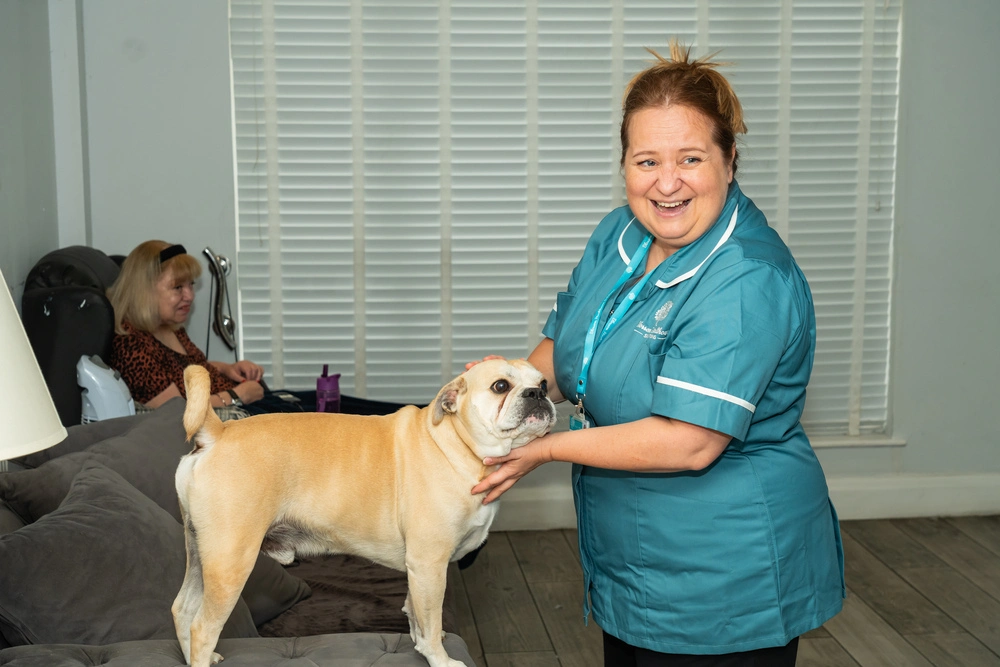
When families first start looking for home care, they tend to focus on the practical things. How many hours a week. What tasks will be covered. How much it costs. These are reasonable questions and they all need answers.
But the question that most often gets overlooked, and the one that turns out to matter most, is: will we see the same person?
Continuity of care is the single most significant predictor of a good home care experience. It is what our clients tell us, consistently, when we ask what has made the difference. And it is the thing that is most frequently missing when people come to us having had a difficult experience elsewhere.
This is an attempt to explain why it matters so much, and what it takes to actually deliver it.
What continuity of care means in practice
Continuity of care means the same carer, or a small and consistent group of carers, visiting the same person on a regular basis. Not a different face each time. Not whoever is available on the rota that morning.
It sounds simple. In practice, it is one of the hardest things for a care provider to get right, and the ones who do not get it right tend to either not understand why it matters or, more commonly, have built their business model in a way that makes it impossible to prioritise.
For the person receiving care, continuity is not a preference. It is the foundation of everything.
"We have been delivering care across West Essex and Hertfordshire since 2019. In that time, the three words that come back most consistently when families describe what matters to them are the same ones: continuity, consistency and communication. They are not separate things. They are the same thing, approached from different angles." Blossom Healthcare Solutions
Why it matters for older people and those living with dementia
For older people in general, and for people living with dementia in particular, the familiarity of a known face carries significant clinical weight. It is not just about comfort, though comfort matters.
When a person has dementia, unfamiliar faces and unpredictable changes to routine can cause genuine distress. Anxiety, agitation, withdrawal, and sometimes very difficult behaviour. These are often the direct result of a care environment that is too changeable.
Conversely, a consistent carer who knows the person well, knowing which door to knock, how to handle the transition into a morning routine, which topics settle someone down and which ones raise tension. Such a carer can provide care that is genuinely calming. They are not just completing tasks. They are managing a relationship.
What good dementia care continuity looks like:
- The same one or two carers, on a regular, predictable schedule
- Carers who know the person's history, preferences and sensory triggers
- Handover information that is specific and personal, not just clinical
- A care team that notices when something has shifted, and acts on it
- Family involvement that is genuine and ongoing, not just at review time
The relationship between continuity and safety
There is a safety argument for continuity that is often underappreciated.
A carer who has visited someone regularly for months knows what normal looks like. They notice when it has changed. They pick up on the small things, a change in skin colour, an unusual quietness, a new confusion at the door. A carer seeing someone for the first time has no baseline for any of this.
We have had carers flag concerns about a client that turned out to be an early sign of infection, a medication issue, or the beginning of a significant health change. In each of those cases, early intervention prevented a hospital admission, or worse.
That kind of vigilance is not something you can train into a visit from a stranger. It comes from knowing someone, and from caring enough to pay attention.
"One of our carers visited the same gentleman every morning for over a year. One Tuesday she arrived and something felt off. She could not name exactly what. She called us immediately. It turned out he had had a minor stroke overnight. Because she knew him so well, and because she trusted her instinct enough to act on it, he was in hospital within the hour. He recovered fully." Blossom Healthcare Solutions
What good home care looks like in West Essex
In Harlow, Epping Forest, Uttlesford and the surrounding towns and villages, families navigating care for the first time often encounter the same challenge: plenty of providers to choose from, but real difficulty knowing which ones will actually deliver what they promise.
Here is what we would say to look for.
Ask directly: will we see the same carers? A provider who hedges this answer is telling you something. A good provider will explain how they match carers to clients, how they protect that consistency, and what they do when a usual carer is unavailable.
Ask how they communicate when something changes. You should hear from them, not have to chase. A phone call when anything significant shifts is a baseline expectation, not a premium.
Ask whether you will have a named care manager or a dedicated supervisor Someone you can actually call. Someone who knows your family member, not just their file.
Look at the reviews carefully. Not just the star ratings. Read what people are actually saying. When reviews mention the same carer by name, or describe a carer turning a difficult situation around, that tells you something about how the provider operates.
How we approach continuity at Blossom Healthcare Solutions
We plan our rotas with continuity as the primary consideration. Not convenience. Not geography alone. We build schedules around keeping the same carers with the same clients as a rule, not as an aspiration.
When a usual carer is unavailable, we let families know in advance. We introduce the covering carer. We do not send an unknown face to someone's door without preparation.
We match carers to clients with care. We look at personality, communication style, interests and pace, not just skills and availability. A good match on paper sometimes needs adjustment in practice, and when that happens we act on it quickly.
We also invest in our carers. Properly trained, properly supervised and properly valued people do better work. They stay longer. They build real relationships with the people they support. And those relationships are, in the end, the whole point.
"We started with a simple belief: that home care could be done better. Not bigger. Better. The same faces, honest communication and a care package built around the person, not around what is convenient for the provider. Six years in, that is still what we are about." Patience Maisiri, Founder, Blossom Healthcare Solutions
If you are currently experiencing disrupted care
If you or someone you love is receiving home care from a provider and continuity is becoming a problem, it is worth raising it directly first. Good providers will take the feedback seriously and act on it.
If the situation does not improve, or if you feel the provider's model is structurally unable to deliver what you need, it may be time to look at alternatives.
We are always happy to talk through a situation honestly, including when we think someone is better placed elsewhere. If we can help, we will tell you clearly. If we cannot, we will say so and help you find someone who can.

Blossom Healthcare Solutions

Unit E
Warwick House
Perry Road
Staple Tye
Harlow, Essex
Blossom Healthcare Solutions
CM18 7NF